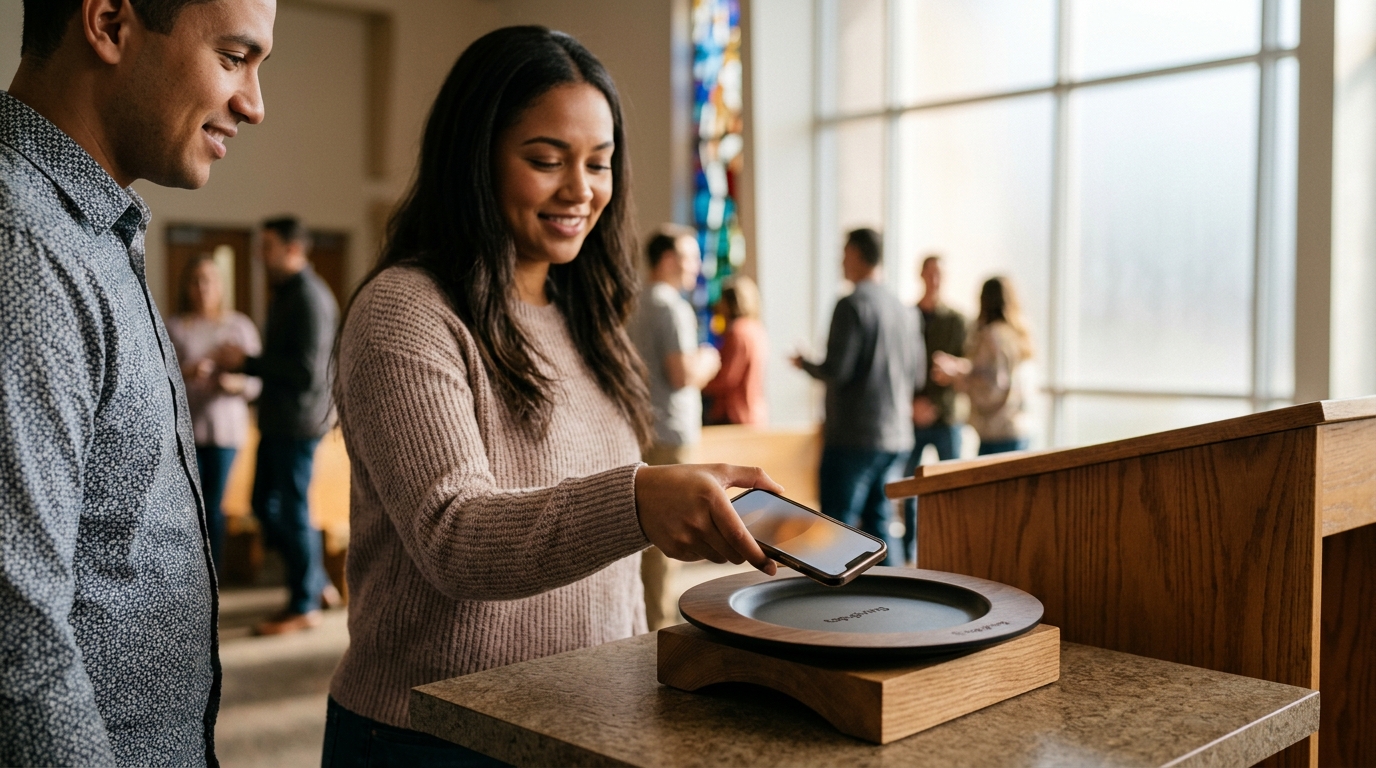
Hardware only NFC tap to give is a standalone physical device that opens a donation link when a smartphone taps it, without requiring a proprietary app or monthly subscription. This guide explains how passive NFC hardware works, the donor experience flow, and why a one-time purchase model is the most cost-effective strategy for churches and nonprofits in 2026.
Passive NFC Hardware
Passive NFC hardware is a small, battery-free chip embedded in a durable physical object, such as a plate, card, or sticker, that transmits a data payload when energized by a nearby smartphone. Unlike active RFID or Bluetooth devices, passive NFC tags do not require a power source, making them ideal for permanent installation in sanctuaries, lobbies, and event spaces. The technology relies on electromagnetic induction, where the phone's NFC antenna creates a magnetic field that powers the tag and allows it to send a URL to the device.
Technical Specifications and Durability
Modern NFC tags used in the giving sector are typically built on the NTAG213 or NTAG215 chip standards. These chips are small enough to fit inside a 0.85mm thick PVC laminate, which provides waterproof and dustproof protection. This durability ensures the hardware withstands daily handling, cleaning, and environmental exposure without degrading the signal. The chip is programmed with a specific URL and then locked, preventing unauthorized reprogramming or data alteration.
Hardware-Only vs. Platform-Locked Models
The primary distinction in the market is between hardware-only solutions and platform-locked ecosystems. Hardware-only NFC tags are agnostic; they simply open a web link. This means they work with any giving platform, including Tithely, Pushpay, Givelify, Donorbox, or a custom website. In contrast, some competitors sell tags that are hard-coded to their own proprietary software, requiring the buyer to subscribe to their platform to use the hardware. A hardware-only approach allows organizations to retain ownership of their donor data and choose their preferred software stack without being locked into a specific vendor's ecosystem.
Donor Experience Flow
The donor experience flow is the sequence of interactions a supporter undergoes from the moment they see the physical tag to the completion of their digital gift. A seamless flow minimizes friction, which is the primary barrier to digital giving. The goal is to reduce the time between the decision to give and the actual transaction to under ten seconds.
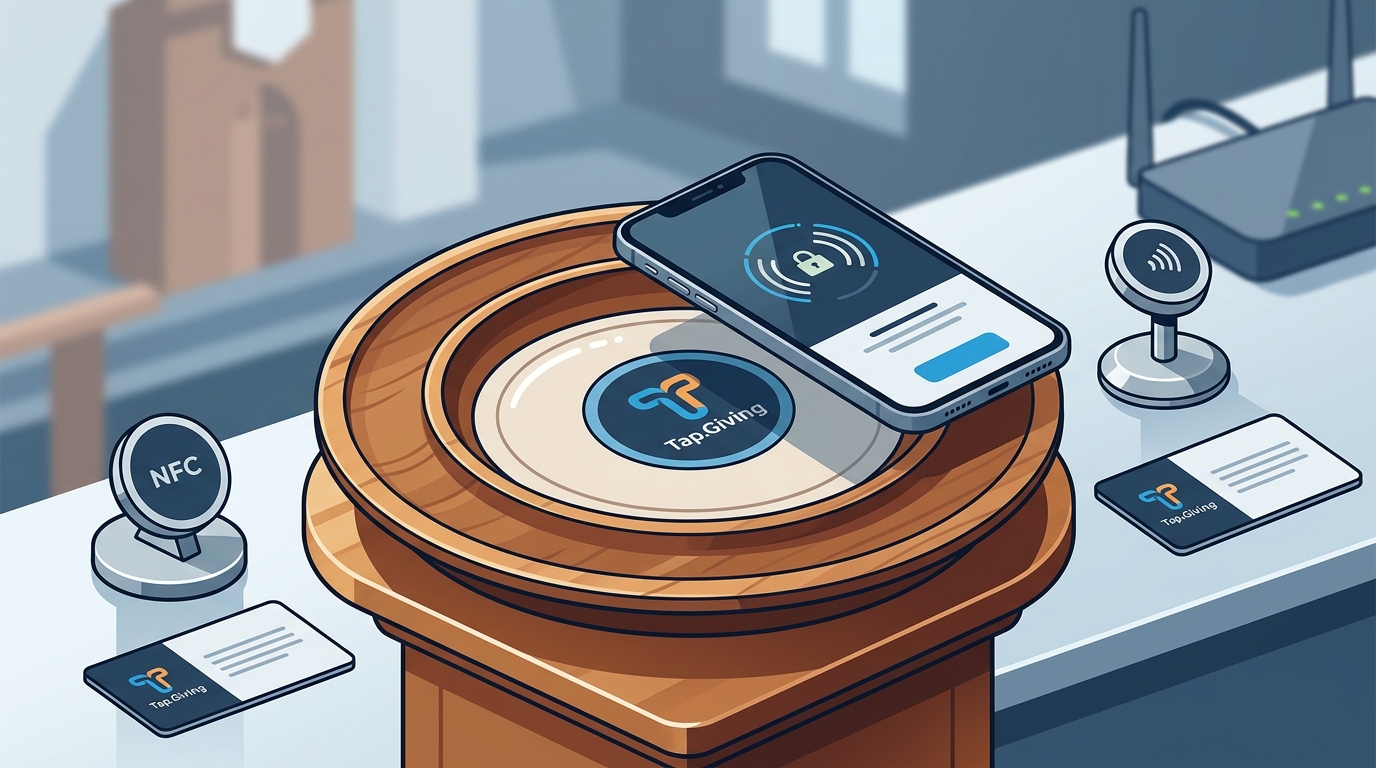
Step 1: The Tap Interaction
The process begins when a donor holds their smartphone near the NFC plate. The phone detects the tag and displays a notification or automatically opens the browser. This interaction requires no app download, no account creation, and no manual URL entry. The physical tag serves as a tangible prompt, bridging the gap between the in-person service and the digital giving page.
Step 2: Landing Page and Payment
Once the browser opens, the donor lands on the organization's existing giving page. This page should be mobile-optimized and load quickly. The donor can then select a giving amount, designate a fund, and complete the payment using Apple Pay, Google Pay, or a credit card. Because the tag points directly to the giving page, the donor is already in the context of giving, which significantly increases conversion rates compared to scanning a QR code that might lead to a general homepage.
Step 3: Confirmation and Retention
After the payment is processed, the donor receives a confirmation receipt via email or SMS. This step is crucial for building trust and encouraging recurring giving. The hardware-only model allows the organization to use their own CRM or giving platform to manage this relationship, ensuring that donor data remains within their existing systems rather than being siloed in a third-party app.
Hardware-Only vs. Platform-Locked Comparison
| Feature | Hardware-Only NFC (Tap.Giving) | Platform-Locked NFC |
|---|---|---|
| Monthly Fees | None | Required subscription |
| Platform Compatibility | Any URL (Tithely, Pushpay, etc.) | Proprietary platform only |
| App Requirement | No app needed | Often requires app download |
| Data Ownership | Organization retains data | Vendor may own data |
| Long-Term Cost | One-time hardware cost | Recurring subscription + transaction fees |
Key Takeaways
- Hardware-only NFC tags are passive, battery-free devices that open a URL when tapped by a smartphone.
- This model eliminates monthly subscription fees and transaction charges associated with platform-locked ecosystems.
- NFC tags are compatible with all major giving platforms, including Tithely, Pushpay, Givelify, and Donorbox.
- The donor experience is streamlined to under ten seconds, requiring no app download or account creation.
- Durable PVC construction ensures the hardware withstands daily use in high-traffic church and nonprofit environments.
- Organizations retain full ownership of donor data by using their existing giving platforms with hardware-only tags.
- One-time hardware investment provides a lower total cost of ownership over five years compared to subscription models.
- NFC technology is more reliable than QR codes for in-service giving because it does not require camera alignment or manual scanning.
Frequently Asked Questions
Do I need a special app for NFC tap to give?
No. Hardware-only NFC tags work with the native NFC reader built into all modern smartphones. Donors simply tap their phone to the tag, and their default browser opens the giving page. No app download is required.
Which phones support NFC giving?
All iPhones from the XS (2018) and later support NFC. Most Android phones released since 2015 also support NFC. This covers the vast majority of smartphones currently in use by churchgoers and donors.
Can I use NFC tags with my existing giving platform?
Yes. Hardware-only NFC tags are programmed with a URL. You can point them to your existing giving page on Tithely, Pushpay, Givelify, Donorbox, or any other platform that has a web URL. No API integration or switching providers is necessary.
Are there monthly fees for hardware-only NFC tags?
No. Tap.Giving and other hardware-only providers charge a one-time fee for the physical tags. There are no monthly subscriptions, setup fees, or transaction fees charged by the hardware provider. You only pay the processing fees associated with your existing giving platform.
How durable are NFC tap plates?
NFC plates are typically made from laminated PVC with a thickness of 0.85mm. They are waterproof, dustproof, and designed to withstand daily handling and cleaning. The NFC chip is protected within the laminate, ensuring long-term reliability.
What is the difference between NFC and QR codes for giving?
NFC requires a simple tap, while QR codes require the user to open a camera app and align the code within the frame. NFC is faster and more intuitive, leading to higher conversion rates. Additionally, NFC tags can be programmed with a specific URL, whereas QR codes are static images that can be easily copied or misread.
Can I customize the design of the NFC plates?
Yes. Hardware-only providers like Tap.Giving offer custom branding options. You can print your church or nonprofit's logo, colors, and artwork on the PVC plate. This ensures the hardware matches your organization's visual identity and feels like a natural part of your sanctuary or lobby.
Is NFC technology secure for donations?
Yes. The NFC tag itself only transmits a URL. The actual transaction takes place on your secure, HTTPS-encrypted giving page. The tag does not store any donor data, payment information, or sensitive personal details. Security is handled by your existing giving platform.
Conclusion
Hardware-only NFC tap to give is the most efficient and cost-effective way to modernize your giving experience in 2026. By choosing a standalone hardware solution, you avoid the recurring costs and platform lock-in associated with proprietary ecosystems. Tap.Giving provides high-quality, durable NFC plates that integrate seamlessly with any giving platform, ensuring your donors can give with a single tap. To see how this solution fits your specific needs, for a personalized quote and design preview.