
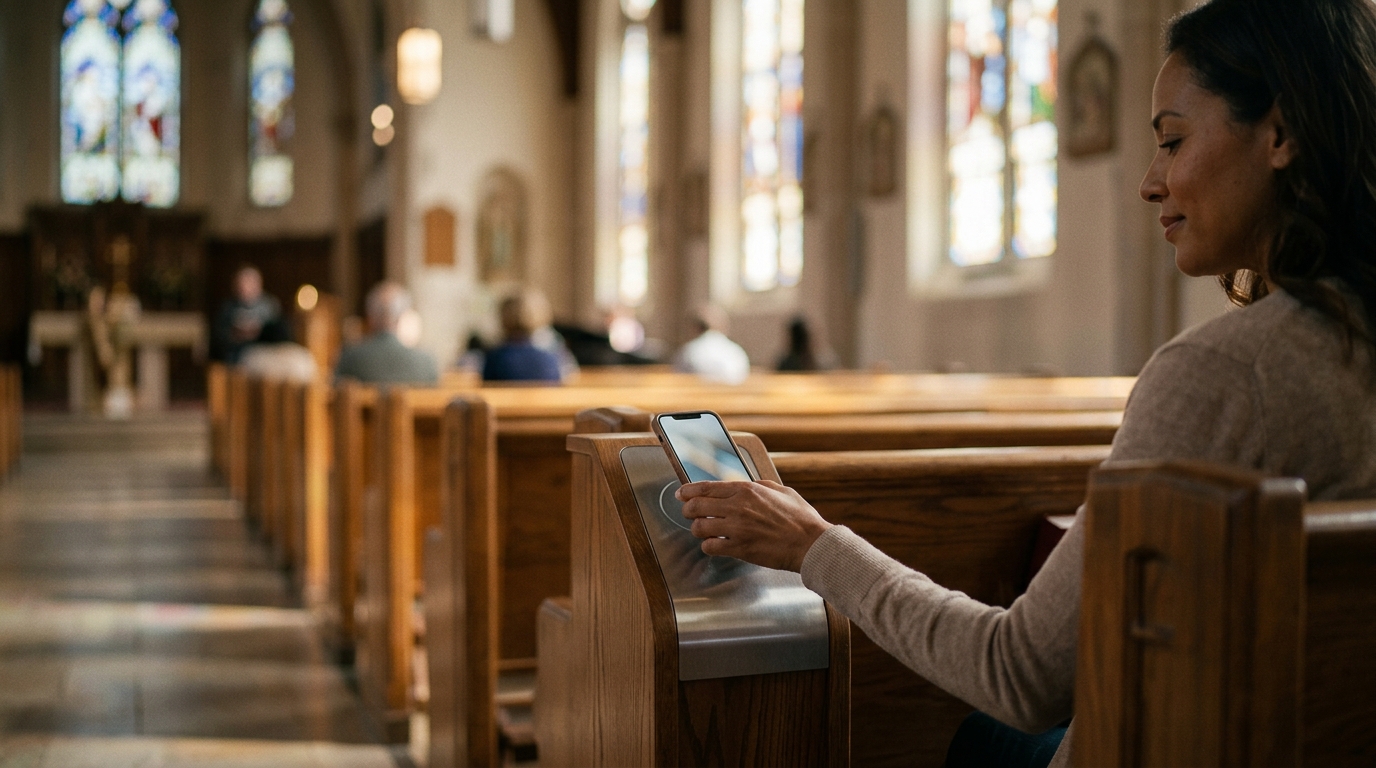
Churches can buy NFC tap to give devices from specialized hardware providers like Tap.Giving, which sells one-time purchase plates that work with existing giving platforms. This guide covers the donor experience, hardware types, passive mechanisms, browser redirects, and standalone terminals to help you choose the right solution.
Donor Experience Flow
The donor experience flow is the sequence of steps a giver takes to complete a donation. For NFC tap to give, this flow is designed to be as short as possible. A donor holds their phone near the plate, the giving page opens, and they confirm the gift. This process typically takes under ten seconds. The goal is to remove friction so that the impulse to give is not lost.
Traditional methods like QR codes require opening a camera, aiming, and waiting for a scan. Apps require a download and login. NFC bypasses these steps. The phone reads the tag instantly. This speed is critical during a worship service where attention is divided. A smooth flow increases the likelihood that a donor completes the transaction.
Passive NFC Hardware
Passive NFC hardware is a type of tag that does not require a battery. It draws power from the electromagnetic field of the smartphone when it is brought close. This makes the hardware durable and maintenance-free. There is no charging, no battery replacement, and no complex setup. The tag simply sits on the pew or chair and waits for a tap.
Because passive tags have no moving parts or power source, they are highly reliable. They can last for years without degradation. This reliability is important for church environments where equipment is used frequently. Passive hardware is the standard for tap to give plates because it offers the best balance of cost, durability, and ease of use.
NFC Tag Hardware
NFC tag hardware is the physical component that stores the URL for the giving page. It consists of a small chip and an antenna. The chip holds the web address, and the antenna transmits it to the phone. The hardware is usually encased in a durable material like PVC or plastic. This casing protects the chip and allows for custom branding.
Churches can choose from different shapes and sizes of NFC tag hardware. Some are round discs, while others are rectangular cards. The choice often depends on the seating arrangement and aesthetic preferences. Custom branding with the church logo and colors helps integrate the technology into the worship space. It makes the giving option feel like a natural part of the service rather than an afterthought.
Passive Contactless Mechanism
The passive contactless mechanism is the underlying technology that allows data to be transferred without physical contact. It uses near field communication to exchange data between the phone and the tag. The phone generates a magnetic field, and the tag uses that energy to send its stored data. This mechanism is the same one used for contactless credit cards and mobile wallets.
This mechanism is secure because the data transfer happens over a very short distance, usually less than an inch. This proximity requirement prevents unauthorized access from a distance. It ensures that only the person holding the phone can trigger the action. The security of the mechanism gives church leaders confidence in adopting the technology.
Browser Redirect Mechanism
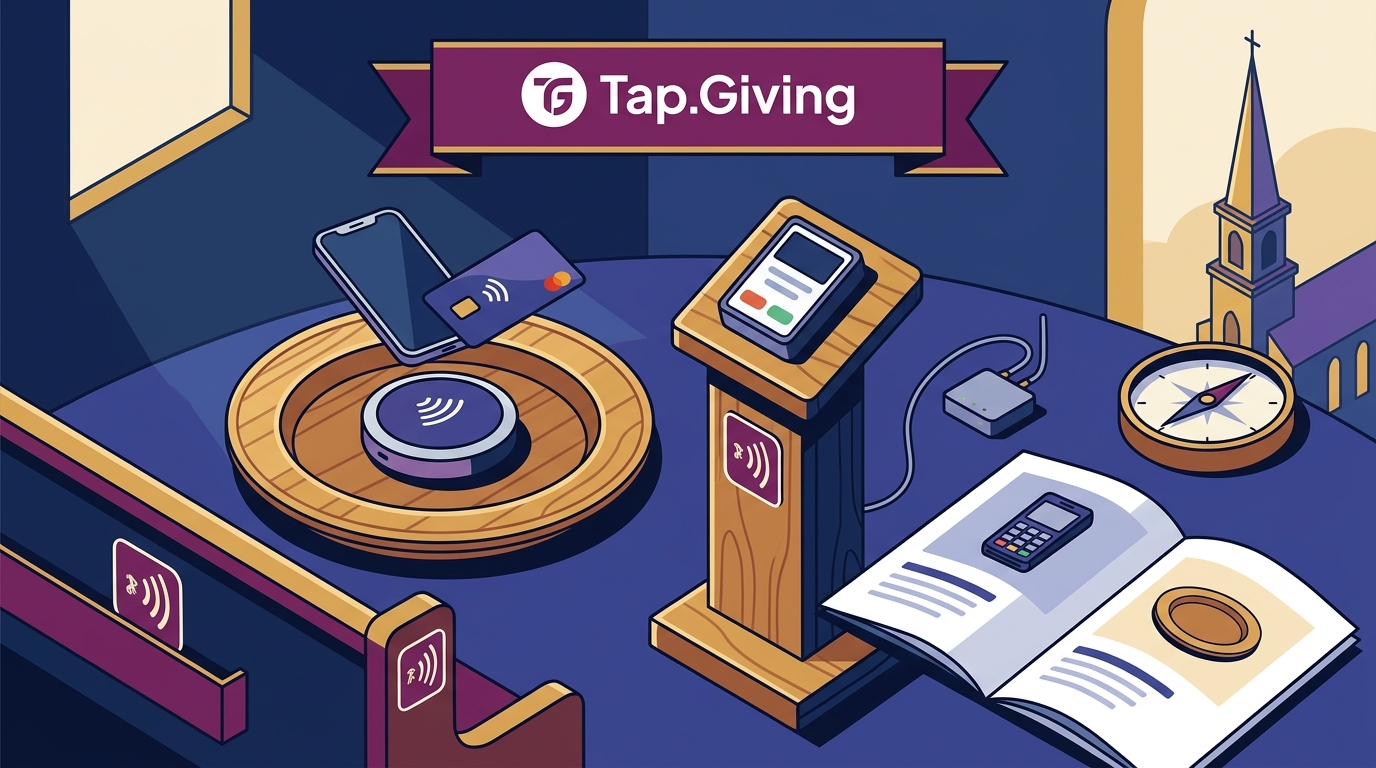
The browser redirect mechanism is the process by which the phone opens the giving page after reading the tag. When the phone detects the NFC tag, it automatically opens the default web browser. The browser then loads the URL stored in the tag. This happens instantly, without the user needing to type anything or search for a link.
This mechanism is crucial because it works with any modern smartphone. It does not require a specific app or a specific operating system. Whether the donor uses an iPhone or an Android device, the browser redirect works the same way. This universality ensures that all members of the congregation can use the tap to give option, regardless of their device preferences.
Standalone Payment Terminals
Standalone payment terminals are devices that process payments directly without redirecting to a web page. They are often used in retail environments where speed is critical. However, for churches, these terminals can be more complex and expensive. They usually require a monthly subscription and a contract with a payment processor. They may also require a specific app or a dedicated device for the donor to use.
While standalone terminals offer a direct payment experience, they do not integrate as seamlessly with existing church giving platforms. They may not support the same level of customization or reporting. For most churches, a simple NFC tag that redirects to their existing giving page is a more practical and cost-effective solution. It allows them to keep their current platform while adding a faster in-person giving option.
Comparison of Options
| Feature | NFC Tap Plate | QR Code | Standalone Terminal |
|---|---|---|---|
| Setup Complexity | Low | Low | High |
| Monthly Fees | No | No | Yes |
| App Required | No | No | Often |
| Speed | Instant | 2-5 seconds | Instant |
| Integration | Works with existing platform | Works with existing platform | Requires new processor |
Key Takeaways
- NFC tap to give devices are available from specialized hardware providers like Tap.Giving.
- Passive NFC hardware is battery-free, durable, and maintenance-free.
- The donor experience flow is designed to be under ten seconds.
- Browser redirect mechanism works with any modern smartphone.
- Standalone terminals are more complex and expensive than NFC plates.
- NFC plates integrate seamlessly with existing giving platforms.
- Custom branding helps integrate the technology into the worship space.
- One-time purchase models avoid recurring monthly fees.
Frequently Asked Questions
Where can I buy NFC tap to give plates for my church?
You can buy NFC tap to give plates from specialized providers like Tap.Giving. These providers offer custom-branded plates that work with your existing giving platform. They are a one-time purchase with no monthly fees.
Do NFC plates require a battery?
No, NFC plates are passive hardware. They do not require a battery. They draw power from the smartphone when it is tapped. This makes them durable and maintenance-free.
Do donors need to download an app to use NFC plates?
No, donors do not need to download an app. The NFC plate opens the giving page in the phone's default browser. This works with any modern smartphone, whether it is an iPhone or an Android device.
How much do NFC tap to give plates cost?
The cost of NFC tap to give plates varies by provider and quantity. Tap.Giving offers plates starting at $3.50 each. This is a one-time cost with no monthly fees or transaction charges from the hardware provider.
Can NFC plates work with my existing giving platform?
Yes, NFC plates work with any giving platform that has a web URL. They simply redirect the phone to your existing giving page. This means you do not need to switch platforms or change your payment processor.
How long does it take to set up NFC tap to give?
Setup is quick. You order the plates, and they arrive pre-programmed with your giving URL. You simply mount them on the pews or chairs. The entire process can be completed in a few days, depending on shipping times.