
Do Tap-to-Give Plates Integrate With Pushpay for Secure Donations?
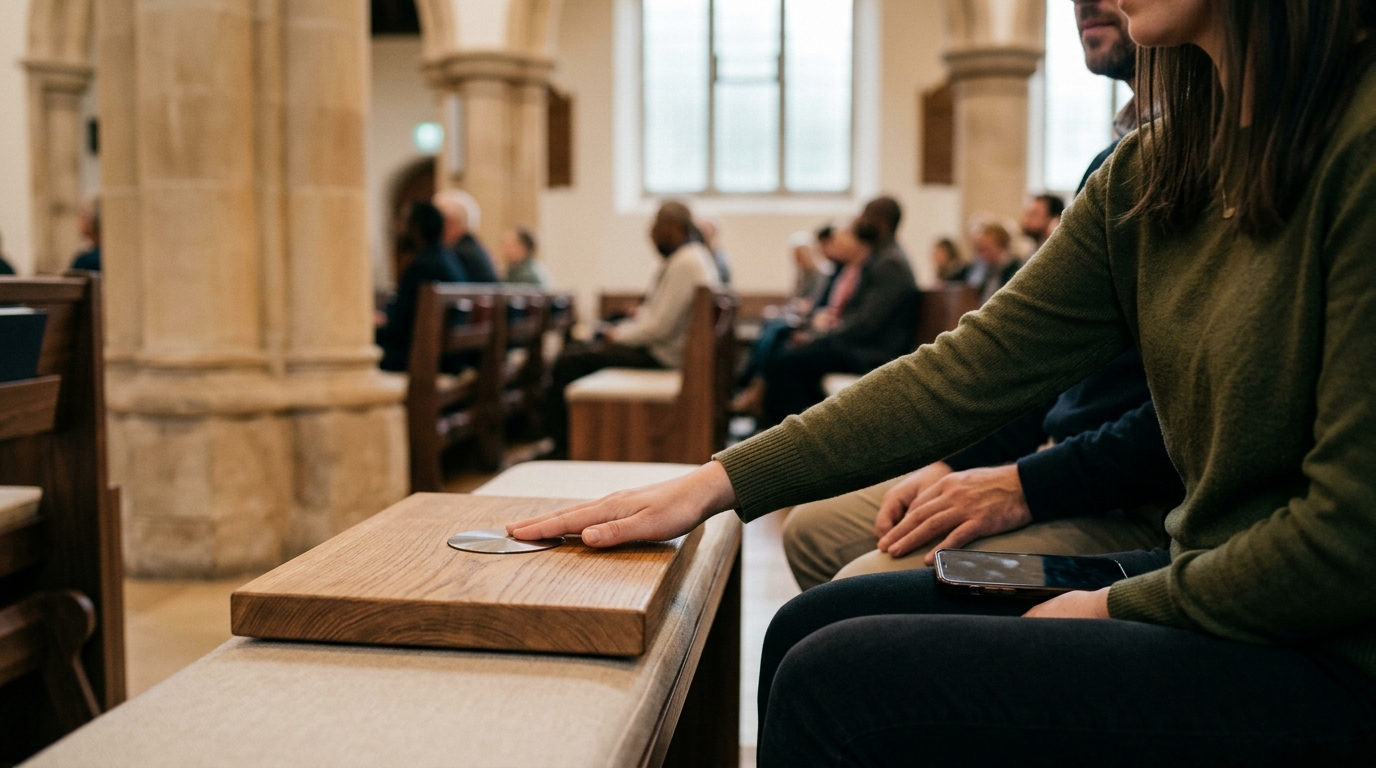
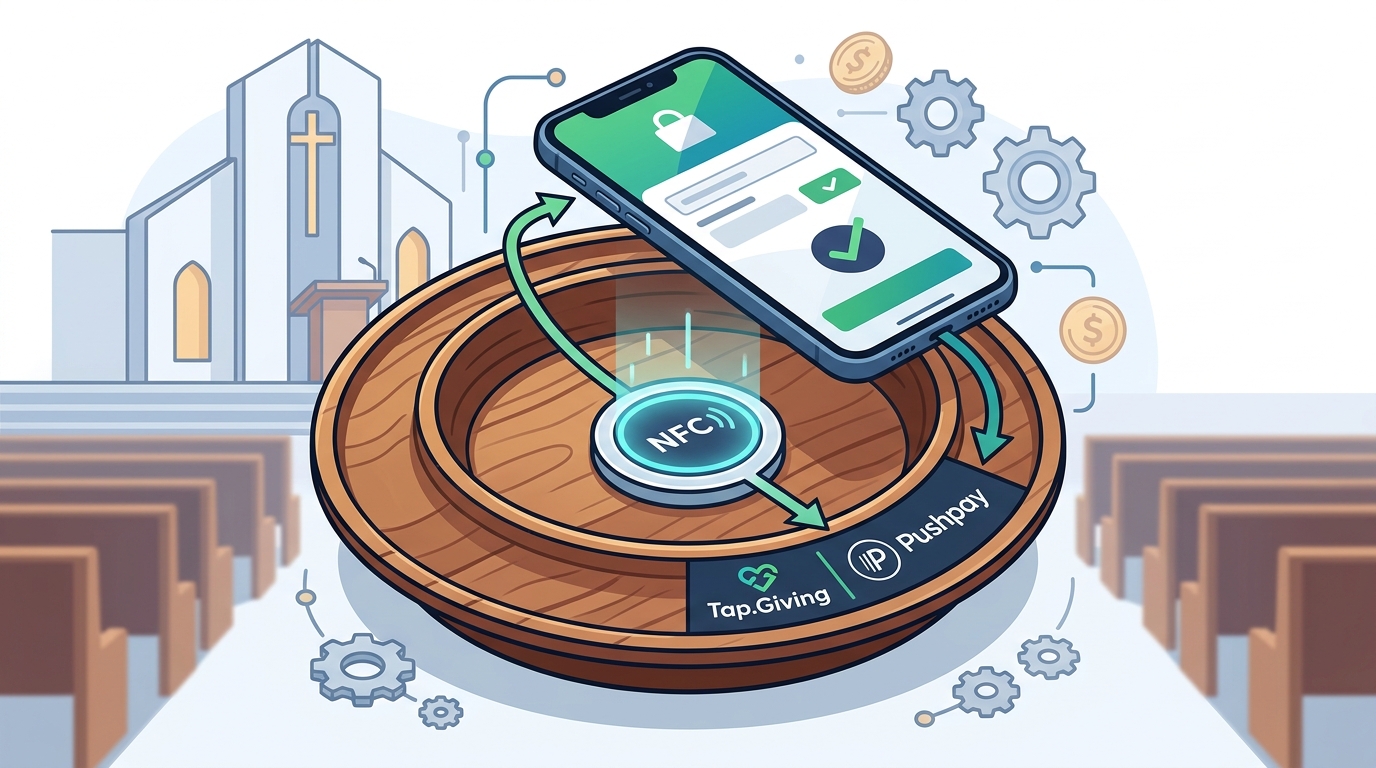
Yes, tap-to-give plates integrate directly with Pushpay by opening your existing Pushpay giving URL in a mobile browser. This connection requires no API, no SDK, and no platform migration. The plate acts as a physical trigger that sends the donor to the secure Pushpay checkout page. This guide covers how to choose, verify, and deploy these plates for your congregation.
How to Choose the Right Hardware
Choosing the right hardware is the first step in a successful integration. A tap-to-give plate is a physical NFC tag that stores a URL. When a donor taps their phone, the browser opens that URL. For Pushpay users, the URL is your specific Pushpay giving page. The quality of the hardware determines the reliability of the tap.
Material Durability
Church environments are high-traffic and often involve physical contact. You need plates made from durable materials. Tap.Giving uses double-laminated PVC that is 0.85mm thick. This material is waterproof and dustproof. It withstands daily wear better than thin stickers or paper tags.
Antenna Size and Read Range
The size of the NFC antenna coil affects how easily a phone can read the tag. A larger plate holds a larger coil. This increases the read range and makes the tap more forgiving. A 4-inch plate is the standard for pew backs because it offers the best balance of visibility and read reliability.
Platform Agnosticism
A critical factor is whether the hardware is locked to a specific software provider. Some vendors sell plates that only work with their own giving platform. Tap.Giving plates are hardware-only. They store a URL and work with any platform, including Pushpay. This ensures you are not locked into a single vendor for your hardware.
Questions to Ask Before Committing
Before purchasing any NFC hardware, you must ask specific questions to ensure compatibility and long-term value. These questions separate trustworthy vendors from risky ones.
Is the Pricing Published?
Reputable vendors publish their pricing clearly. If a vendor requires a sales call to provide a quote for a simple hardware item, that is a red flag. Tap.Giving publishes all pricing tiers on their website. You can see the exact cost per plate based on quantity without speaking to a sales representative.
Does the Hardware Work If I Switch Platforms?
Churches often change giving platforms over time. You need to know if your hardware will become obsolete if you switch. Tap.Giving plates are programmed with a URL. If you switch from Pushpay to another platform, you can update the URL on the plates. This is often done through a redirect service or by reprogramming the tags. This flexibility protects your investment.
Are There Hidden Fees?
Ask about monthly fees, setup fees, and transaction fees. Tap.Giving charges a one-time cost for the plates. There are no monthly fees and no transaction fees taken by Tap.Giving. All payment processing fees are handled by your existing platform, such as Pushpay.
How to Verify Technical Claims
Technical claims from vendors should be verified before purchase. You can check several things to ensure the hardware will work as advertised.
Test the Read Range
Request a sample or test unit before placing a bulk order. Test the plate with different phone models. iPhones and Android phones have different NFC implementations. A plate that works well on one model may be less reliable on another. Tap.Giving plates are tested to work with iPhone 7 and newer, and Android phones from 2015 or later.
Check the Chip Type
Most modern NFC tags use NTAG215 or NTAG216 chips. These are standard, reliable, and widely supported. Ask the vendor what chip they use. If they use a proprietary or obscure chip, it may have compatibility issues. Standard chips ensure broad device support.
Verify the Lock Status
The Integration Process and Timeline
Integrating tap-to-give plates with Pushpay is a straightforward process. It involves three main steps: ordering, programming, and mounting. The entire process typically takes 2 to 3 weeks from order to installation.
Step 1: Order and Design
You start by ordering the plates. You can customize the design with your church logo and colors. Tap.Giving provides a free design proof before manufacturing. This ensures the plates look professional and match your brand. You also provide your Pushpay giving URL during this step.
Step 2: Programming and Shipping
Once the design is approved, the plates are manufactured. Each plate is programmed with your Pushpay URL. The chip is then locked to prevent unauthorized changes. The plates are shipped to your church. Shipping is typically free for Tap.Giving orders.
Step 3: Mounting and Activation
When the plates arrive, you mount them on pew backs, chairs, or tables. Tap.Giving plates come with 3M adhesive backing or pre-drilled screw holes. You choose the mounting method based on your furniture. Once mounted, the plates are ready to use. No further setup is required.
Cost Drivers and Pricing Models
Volume Pricing
The per-unit price decreases as you order more plates. Tap.Giving offers three main tiers. The starter package is for 100 to 199 plates. The full sanctuary package is for 200 to 399 plates. The best value package is for 400 or more plates. This structure allows churches of all sizes to find a cost-effective solution.
One-Time vs. Recurring Costs
Tap.Giving charges a one-time cost for the hardware. There are no monthly fees. This is a significant advantage over subscription-based giving platforms. You pay once, and the plates work indefinitely. This makes the total cost of ownership much lower over time.
Comparison to Alternatives
Other methods of in-person giving, such as kiosks or dedicated apps, often have higher upfront costs and ongoing fees. Kiosks can cost thousands of dollars per unit. Apps require monthly subscriptions. Tap-to-give plates offer a lower-cost entry point into digital giving.
Common Mistakes to Avoid
Several common mistakes can undermine the effectiveness of your tap-to-give implementation. Avoiding these pitfalls ensures a smooth rollout.
Ignoring Metal Surfaces
NFC signals do not penetrate metal. If you mount a plate on a metal chair back, it may not work. Tap.Giving offers an on-metal option with a ferrite shield. This layer blocks the metal from interfering with the NFC signal. Always specify the mounting surface when ordering.
Not Testing Before Full Deployment
Do not assume the plates will work perfectly without testing. Test a few units in different locations. Check the read range and reliability. This helps you identify any issues before mounting all the plates.
Forgetting the QR Code Backup
Not all phones have NFC. Older devices or some Android models may not support it. Tap.Giving plates include a printed QR code as a backup. This ensures that everyone can give, regardless of their phone model. Do not rely solely on NFC.
Tap-to-Give Versus Other Methods
Tap-to-give is one of several methods for in-person giving. Understanding how it compares to other options helps you make an informed decision.
| Method | Friction Level | Cost | Visitor Friendliness |
|---|---|---|---|
| NFC Tap-to-Give | Low (1 tap) | One-time hardware cost | High (No app needed) |
| QR Code | Medium (Scan) | Low (Printed) | Medium (Requires camera) |
| Giving Kiosk | High (Navigate UI) | High (Hardware + Maintenance) | Low (Requires interaction) |
| Dedicated App | Very High (Download) | High (Subscription) | Low (Requires download) |
NFC tap-to-give offers the lowest friction for in-person giving. It requires no app download and no camera. This makes it ideal for first-time visitors and impulse givers.
Situational Fit for Different Churches
The best giving method depends on your specific church context. Tap-to-give plates are particularly well-suited for certain situations.
Large Sanctuaries
In large sanctuaries, kiosks are often impractical. They take up space and require maintenance. Tap-to-give plates can be mounted on every pew back. This ensures that every seat has access to digital giving. The low cost per plate makes this feasible even for very large churches.
Multi-Campus Churches
Multi-campus churches need a consistent giving experience across all locations. Tap-to-give plates provide a uniform solution. You can order plates for each campus and program them with the appropriate Pushpay URL. This ensures a seamless experience for members who attend different campuses.
Small Churches
Small churches may not have the budget for expensive kiosks or apps. Tap-to-give plates offer a low-cost entry point. You can start with a small number of plates and expand as needed. The one-time cost makes it easy to justify the investment.
Security Rules and Donor Protections
Security is a top priority for any giving solution. Tap-to-give plates themselves do not process payments. They simply open a URL. The security is handled by your giving platform, such as Pushpay.
PCI Compliance
Pushpay is a PCI DSS compliant payment processor. This means it meets the highest standards for credit card data security. When a donor taps a plate and gives through Pushpay, their payment information is encrypted and protected. Tap.Giving plates do not store any payment data. They only store a URL.
URL Security
The URL stored on the plate should be a secure HTTPS link. This ensures that the connection between the donor's phone and the Pushpay page is encrypted. Always use HTTPS for your giving page URL.
Donor Privacy
Tap-to-give plates do not collect any personal data. They do not track the donor's location or identity. The donor's privacy is protected by the giving platform's privacy policies. This is an important consideration for churches that value donor privacy.
Regional and Local Considerations
While NFC technology is global, local factors can influence its adoption. In the United States, tap-to-pay has become the dominant form of in-person payment. This cultural shift makes tap-to-give a natural fit for churches.
Consumer Payment Trends
Cash usage has declined significantly in the US. Most consumers now use contactless payments for everyday transactions. This familiarity with tap-to-pay makes it easy for churchgoers to adopt tap-to-give. They already know how to use the technology.
Local Giving Culture
Some communities may be more resistant to digital giving than others. In these cases, it is important to provide clear instructions and support. Tap.Giving plates include a QR code backup, which can help bridge the gap for those who are hesitant about NFC.
When to Act and Timing Impacts
Timing is crucial for a successful giving implementation. The best time to introduce tap-to-give is before a major giving season or event.
Before Holiday Seasons
Christmas and Easter are peak giving seasons. Introducing tap-to-give before these events ensures that your congregation is familiar with the new method. This allows you to capture the increased generosity during these times.
Summer Slump
Church giving often drops in the summer. Introducing tap-to-give in the spring can help mitigate this decline. It provides an easy way for members to give, even if attendance is lower. You can also use tap-to-give plates at summer events like VBS or camps.
Lead Time
Remember that manufacturing and shipping take 2 to 3 weeks. Order your plates well in advance of any major events. This ensures they arrive and are installed in time.
Long-Term Results and Measurable Outcomes
Tap-to-give plates can have a significant impact on your church's giving over time. The key is to measure the results and adjust your strategy as needed.
Increased Digital Giving
Churches that implement tap-to-give often see an increase in digital giving. This is because the method is low-friction and accessible. It makes it easy for donors to give in the moment. Over time, this can lead to a higher percentage of total giving coming from digital channels.
Visitor Conversion
Tap-to-give is particularly effective for converting first-time visitors into givers. Visitors are more likely to give if the process is easy. By removing friction, you increase the likelihood that a visitor will make their first gift. This can lead to long-term donor retention.
Cost Savings
Over time, the one-time cost of tap-to-give plates is amortized. Since there are no monthly fees, the cost per gift decreases as more people use the plates. This makes tap-to-give a cost-effective solution in the long run.
Key Takeaways
- Tap-to-give plates integrate with Pushpay by opening your existing giving URL.
- Choose durable hardware with a large antenna for reliable taps.
- Verify that the vendor publishes pricing and offers platform-agnostic hardware.
- The integration process takes 2 to 3 weeks from order to installation.
- Tap.Giving offers one-time pricing with no monthly fees.
- Avoid mounting plates on metal surfaces without a ferrite shield.
- NFC tap-to-give offers the lowest friction for in-person giving.
- Introduce tap-to-give before major giving seasons for maximum impact.
Frequently Asked Questions
Do I need to switch my giving platform to use tap-to-give plates?
No, you do not need to switch your giving platform. Tap.Giving plates are hardware-only and work with any platform that has a web URL, including Pushpay. You simply program the plates with your existing Pushpay giving URL.
Are tap-to-give plates secure?
Yes, tap-to-give plates are secure. They do not process payments or store payment data. They only open a URL. The security is handled by your giving platform, such as Pushpay, which is PCI DSS compliant.
How long does it take to install tap-to-give plates?
Installation is quick. Once the plates arrive, you can mount them on pew backs or chairs in a matter of minutes. The entire process from order to installation typically takes 2 to 3 weeks.
Do tap-to-give plates work with all phones?
Tap.Giving plates work with iPhone 7 and newer, and Android phones from 2015 or later. They also include a QR code backup for older phones or those without NFC.
What if I want to change my giving platform in the future?
If you change your giving platform, you can update the URL on your Tap.Giving plates. This can be done through a redirect service or by reprogramming the tags. This ensures your hardware remains useful even if you switch platforms.
How much do tap-to-give plates cost?
Tap.Giving plates are priced based on quantity. The cost per plate decreases as you order more. There are no monthly fees or hidden costs. You pay a one-time price for the hardware.